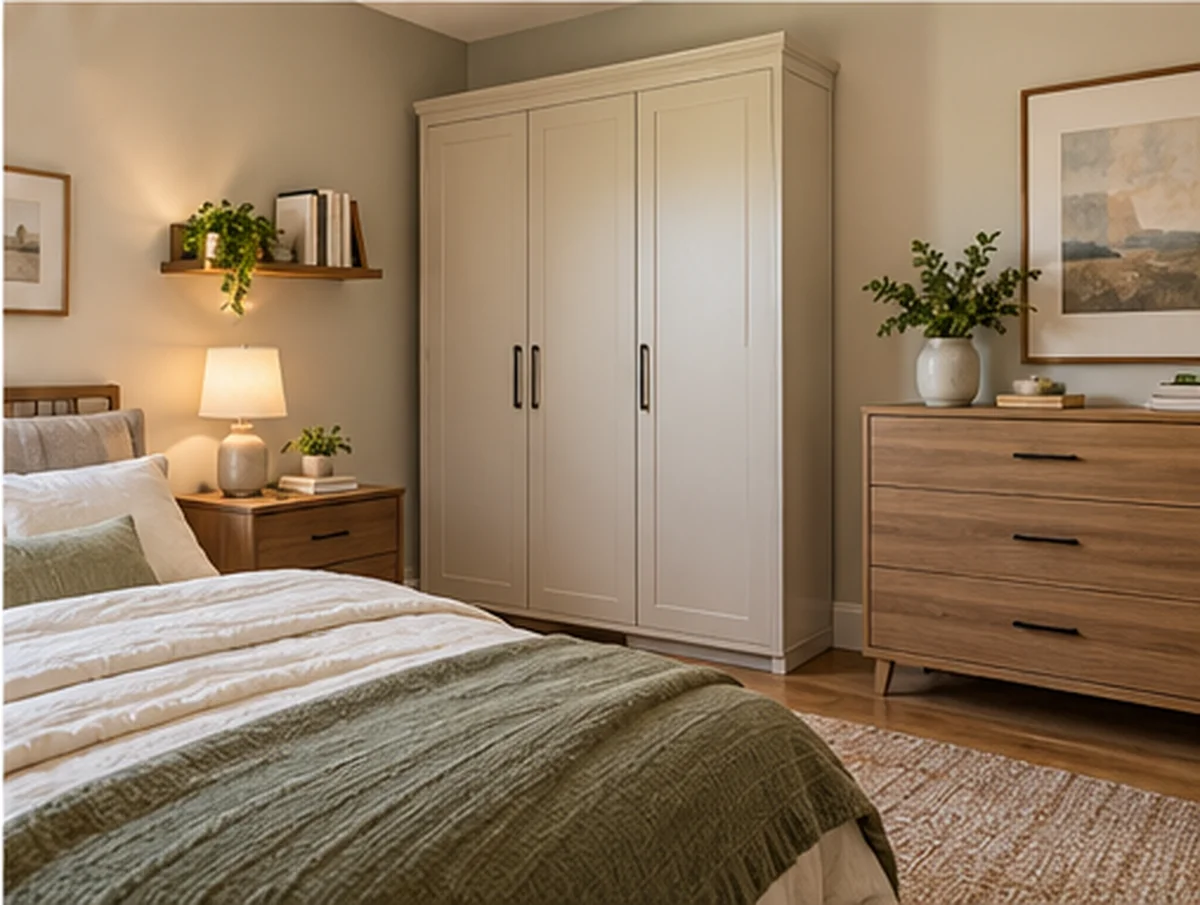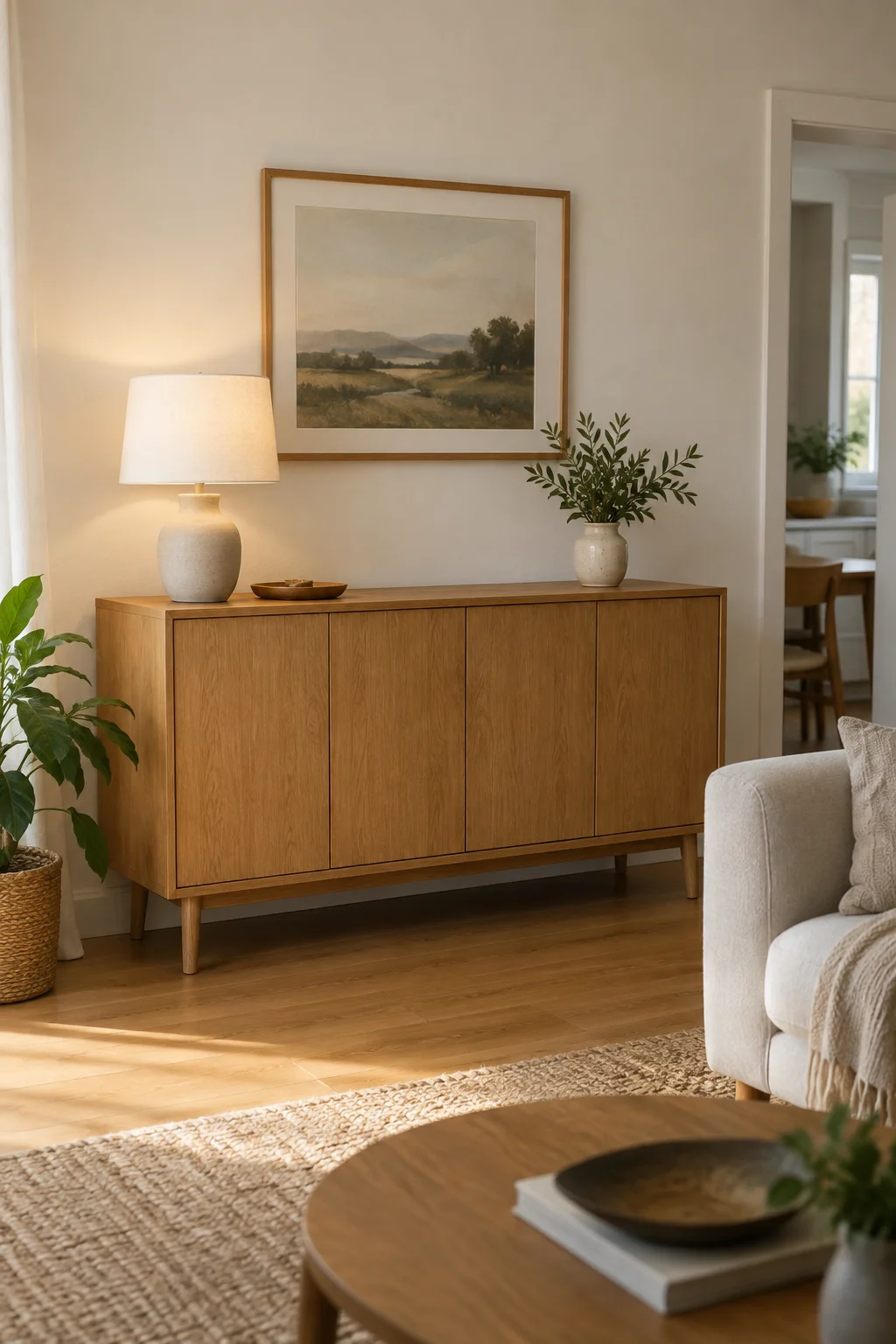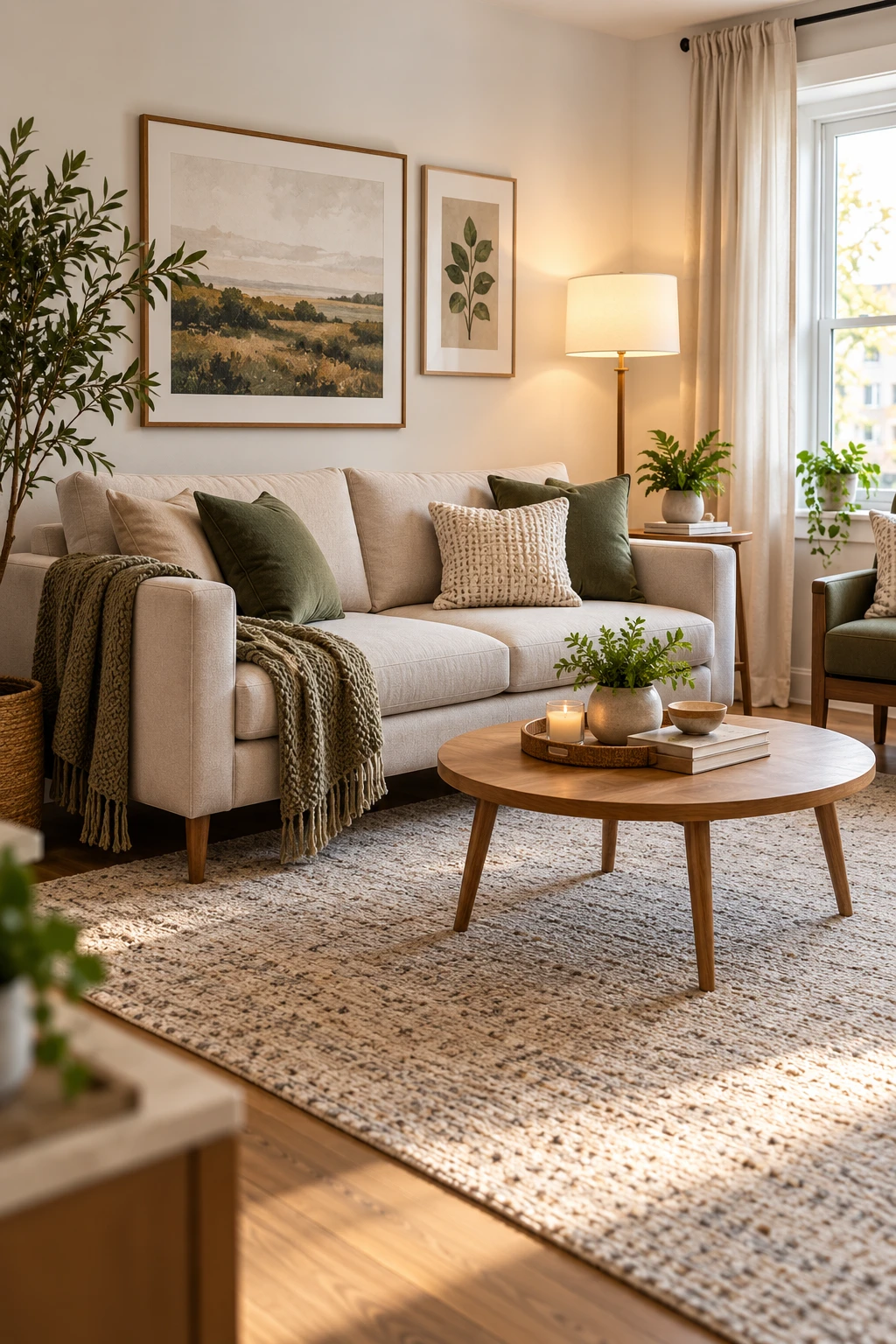
A small living room does not always need smaller furniture. It needs furniture that uses its footprint well. That is a different thing.
A tiny sofa with:
- oversized arms
- deep cushions
- bulky legs
- a wide gap behind it
can take up more usable room than a slightly longer sofa with a cleaner shape. The same is true for:
- coffee tables
- media units
- chairs
- side tables
- storage pieces
The important question is not:
Is this furniture small?
It is:
How much floor does this furniture consume compared with what it actually does for the room?
In a compact living room, every piece should earn its footprint. You want enough room to:
- sit comfortably
- put down a drink
- watch TV
- store everyday items
- walk between furniture
without creating a maze. Here are eleven furniture ideas that can make a small living room feel more open while still giving you the function you need.
1. The Slim-Arm Sofa
The sofa is usually the largest piece of furniture in the living room. That makes the shape of the sofa more important than almost anything else. One of the easiest ways to save floor space is to choose a sofa with narrower arms.
Why arm width matters
Imagine two sofas with the same total width. Sofa A has:
- wide rolled arms
Sofa B has:
- slim straight arms
The second sofa can give you more actual seating inside the same overall footprint. You are not necessarily buying a smaller sofa. You are using the width more efficiently.
Look for cleaner proportions
Useful features include:
- narrow arms
- straight back
- compact seat depth
- simple base
- no oversized side panels
Be careful with very deep sofas
A sofa can look sleek from the front and still project far into the room. Measure:
wall to front edge not just the sofa width. In a narrow living room, a few extra inches of depth can noticeably reduce the main walkway.
Do not sacrifice comfort completely
A shallow sofa that feels uncomfortable is not a good small-space choice simply because it occupies less floor. Sit on it if possible. Check whether the seat depth works for how you actually relax.
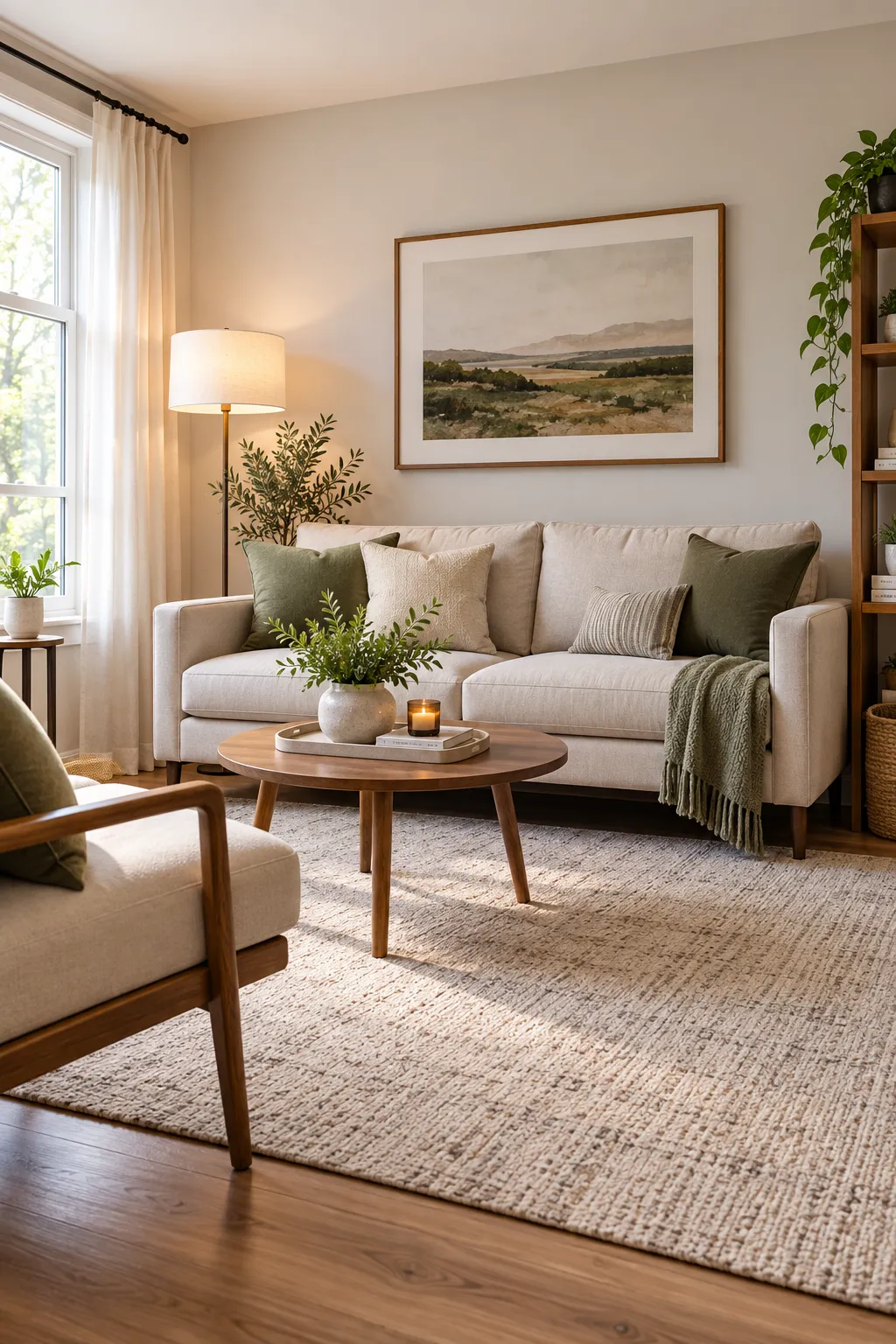
2. The Apartment-Scale Loveseat
A full-size sofa is not always the right choice. If only one or two people regularly use the living room, a well-sized loveseat can free up meaningful floor space.
Why this works
A loveseat can create enough comfortable seating without stretching wall to wall. The space you save might become:
- clearer walkway
- room for a small chair
- open floor
- compact side table
Choose a real loveseat, not an oversized one
Some loveseats are almost as deep and bulky as full sofas. Look at:
- total width
- arm width
- depth
- back thickness
Good for rooms with competing functions
A loveseat can be especially useful when the same room also needs:
- dining space
- desk
- entry zone
The tradeoff
You lose some seating capacity. If you frequently host several people, consider whether:
- lightweight accent chair
- stool
- dining chair
can provide occasional extra seating instead of keeping a larger sofa permanently.
Keep the area beside it intentional
The exposed space should remain useful. Do not immediately fill every inch with:
- large plant
- basket
- side table
- floor lamp
- stool
or you lose the benefit.
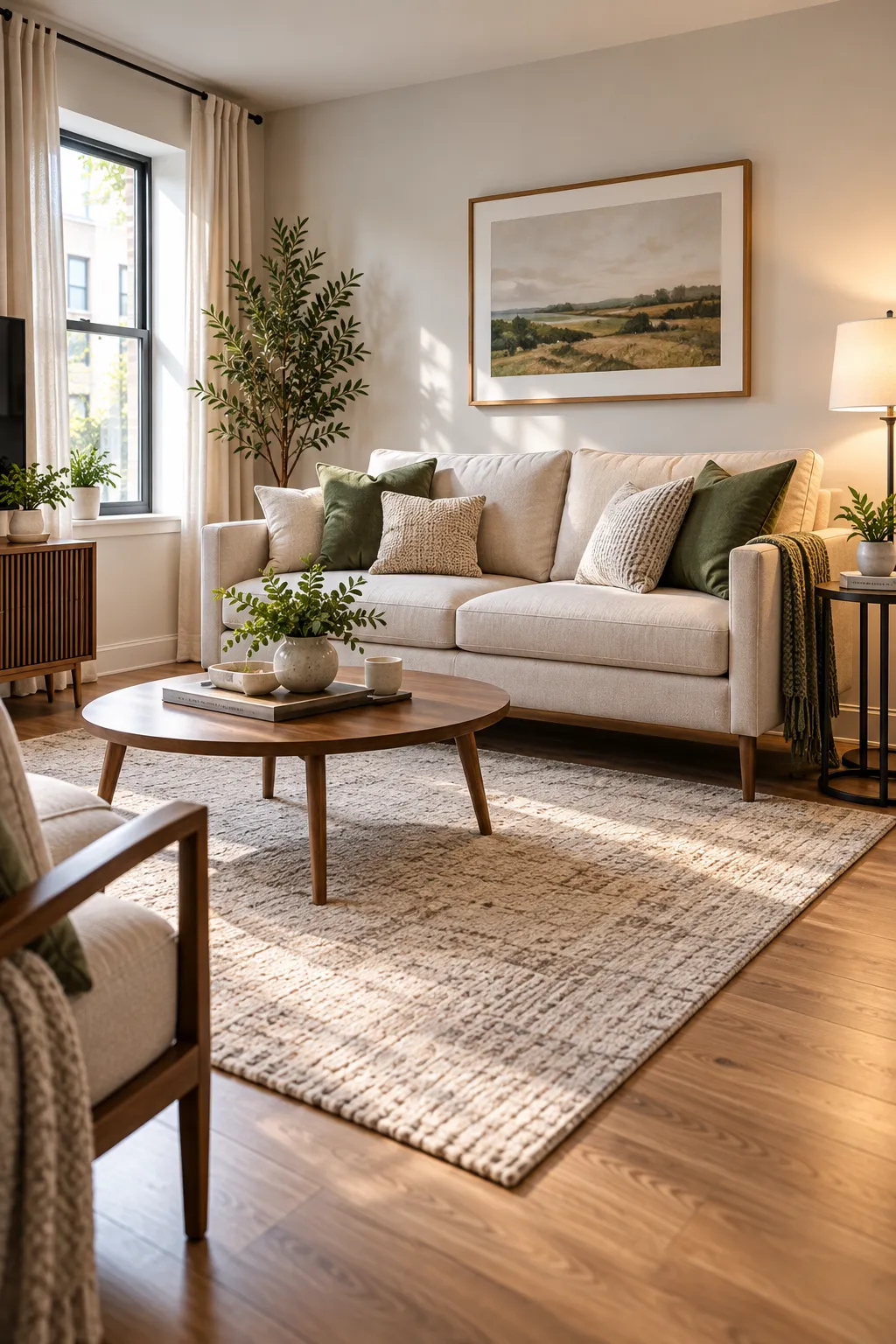
3. The Raised-Leg Furniture Trick
Furniture that sits directly on the floor can make a small room look heavier. Furniture raised on visible legs lets you see more of the floor. That can make the room feel more open even when the actual dimensions have not changed.
Good candidates
Look for visible legs on:
- sofa
- media console
- sideboard
- chair
Why floor visibility matters
Your eye reads continuous flooring as open space. If every furniture piece forms a solid block from floor to seat or cabinet, the room can feel visually packed.
Keep the legs proportionate
Very tall legs are not necessary. Even a modest amount of clearance can help.
Do not choose fragile-looking furniture
The piece still needs to be:
- stable
- appropriate for its load
- comfortable
Visual lightness should not come at the expense of function.
Raised furniture can also make cleaning easier
Depending on clearance, you may be able to:
- vacuum
- sweep
underneath more easily.
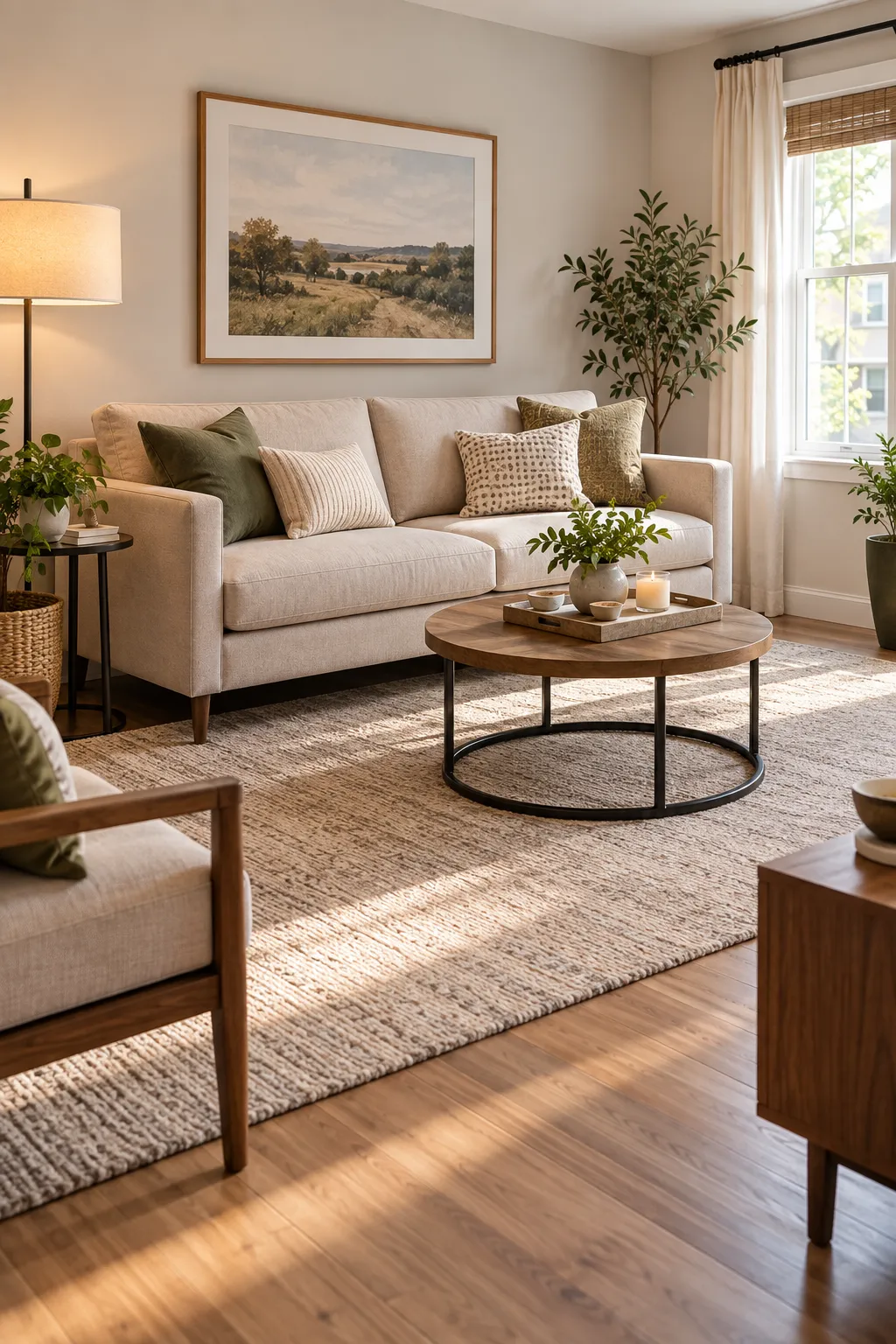
4. The Round Pedestal Side Table
Small living rooms often contain more table legs than necessary. You may have:
- sofa legs
- chair legs
- coffee-table legs
- side-table legs
all competing visually and physically. A round pedestal side table simplifies one of those zones.
Why round works
A round table has no sharp corners projecting into the walkway. That is useful beside:
- sofa
- accent chair
- doorway
Why pedestal works
A single central base reduces leg clutter. It can also make the table easier to approach from different angles.
Keep the top genuinely small
A side table only needs enough room for:
- drink
- book
- small lamp
depending on how you use it. You do not need a mini dining table beside the sofa.
Place it where it replaces a need
Do not add a side table just because the corner is empty. Use one when the sofa or chair actually needs a surface.
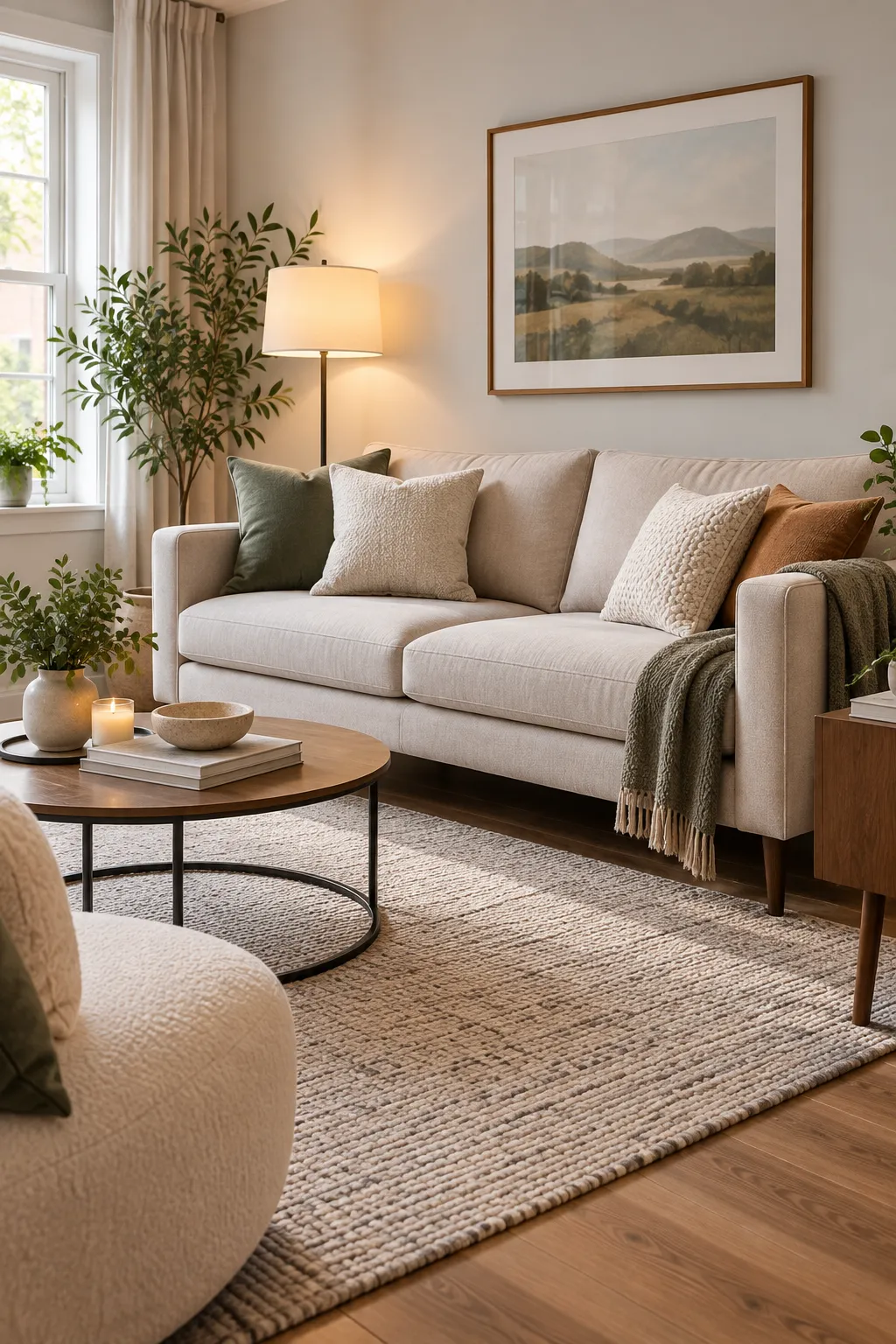
5. The Nesting Coffee Table Set
A large coffee table can dominate the center of a small living room. Nesting tables give you variable surface area.
Everyday mode
Keep one or two tables partially nested. The room stays more open.
Guest mode
Pull the smaller table out when you need:
- extra drinks
- snacks
- laptop surface
Why this works
You only use the extra footprint when necessary.
Choose pieces that genuinely nest
Some sets barely overlap and still occupy almost the same space. Look for tables where the smaller pieces slide significantly underneath.
Keep the shapes simple
Round or softly curved nesting tables are especially useful in tight circulation zones because they avoid sharp corners.
The tradeoff
You have multiple pieces instead of one. If they constantly drift around the room, they can create clutter. Give them a normal default position.
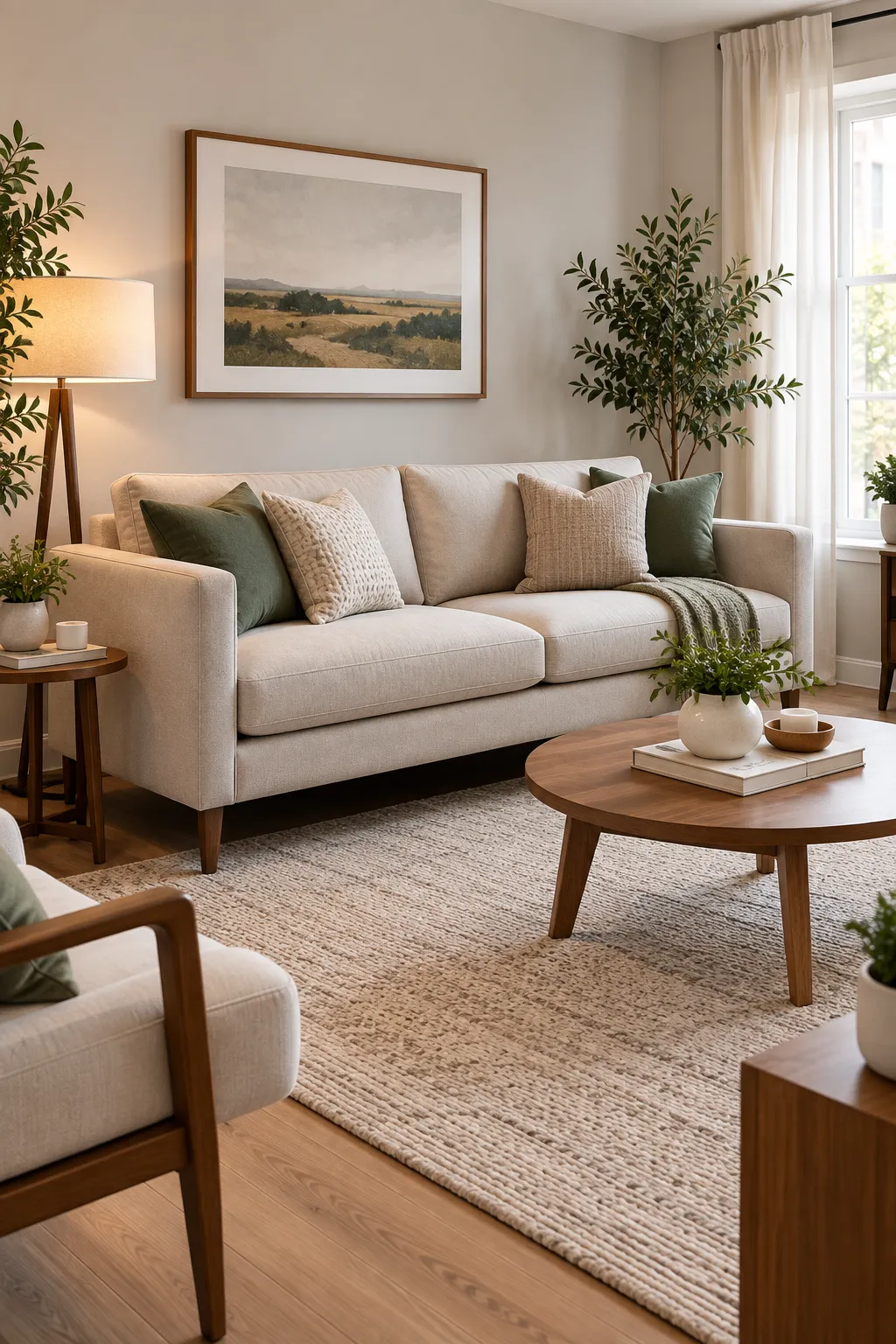
6. The Storage Ottoman Swap
If the living room needs both:
- surface
- storage
a storage ottoman can replace a traditional coffee table.
What it can do
Depending on the design, it can function as:
- footrest
- extra seat
- blanket storage
- coffee-table substitute
Use a tray for drinks
A soft upholstered top is not ideal for cups. Place a stable tray on top when you need a hard surface.
What should go inside
Good categories include:
- throws
- board games
- remotes
- small toys
Avoid turning it into a miscellaneous junk box.
Choose the right size
A giant rectangular ottoman can consume as much floor as a large coffee table. The goal is multifunctionality, not simply replacing one bulky object with another.
Best for homes that actually need hidden storage
If you already have plenty of storage, a lighter coffee table may create more visual space.
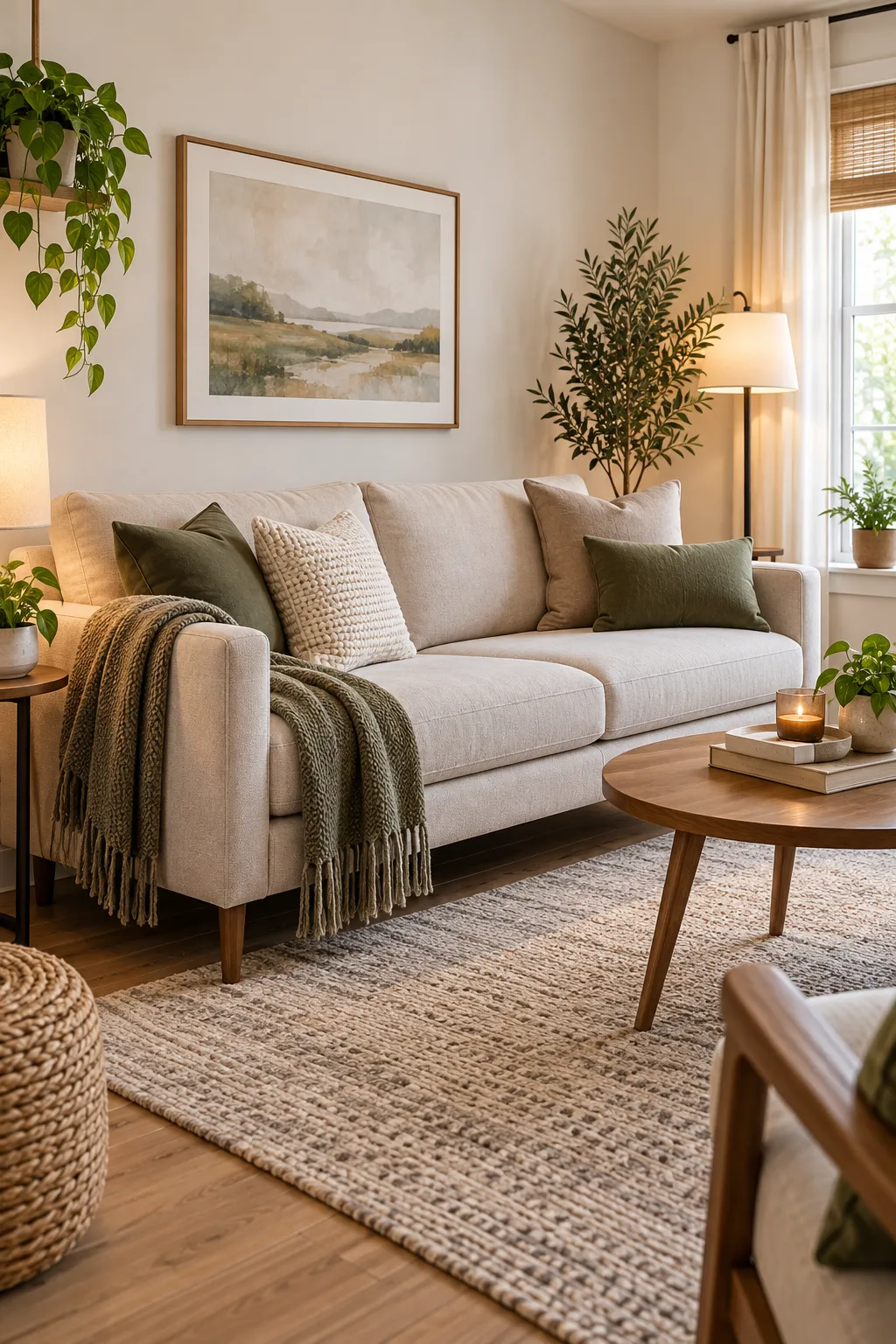
7. The Wall-Mounted Media Console
A traditional media unit occupies floor space whether you need that footprint or not. A wall-mounted console can make the TV area feel lighter.
Why it helps
You can see the floor underneath. That creates:
- visual breathing room
- easier cleaning
- less furniture weight at floor level
Keep the unit shallow
The media console only needs enough depth for the equipment and storage you actually use. A deep cabinet can still project unnecessarily into the room even when mounted.
Hide only what needs hiding
Use closed storage for:
- cables
- controllers
- electronics
- miscellaneous media items
Keep the top mostly clear.
Installation matters
Wall-mounted furniture must be installed appropriately for:
- wall construction
- weight
- product instructions
If you rent or cannot safely mount it, choose a slim freestanding console with visible legs instead.
Do not mount it too high
The furniture should still relate visually to the television and room proportions.
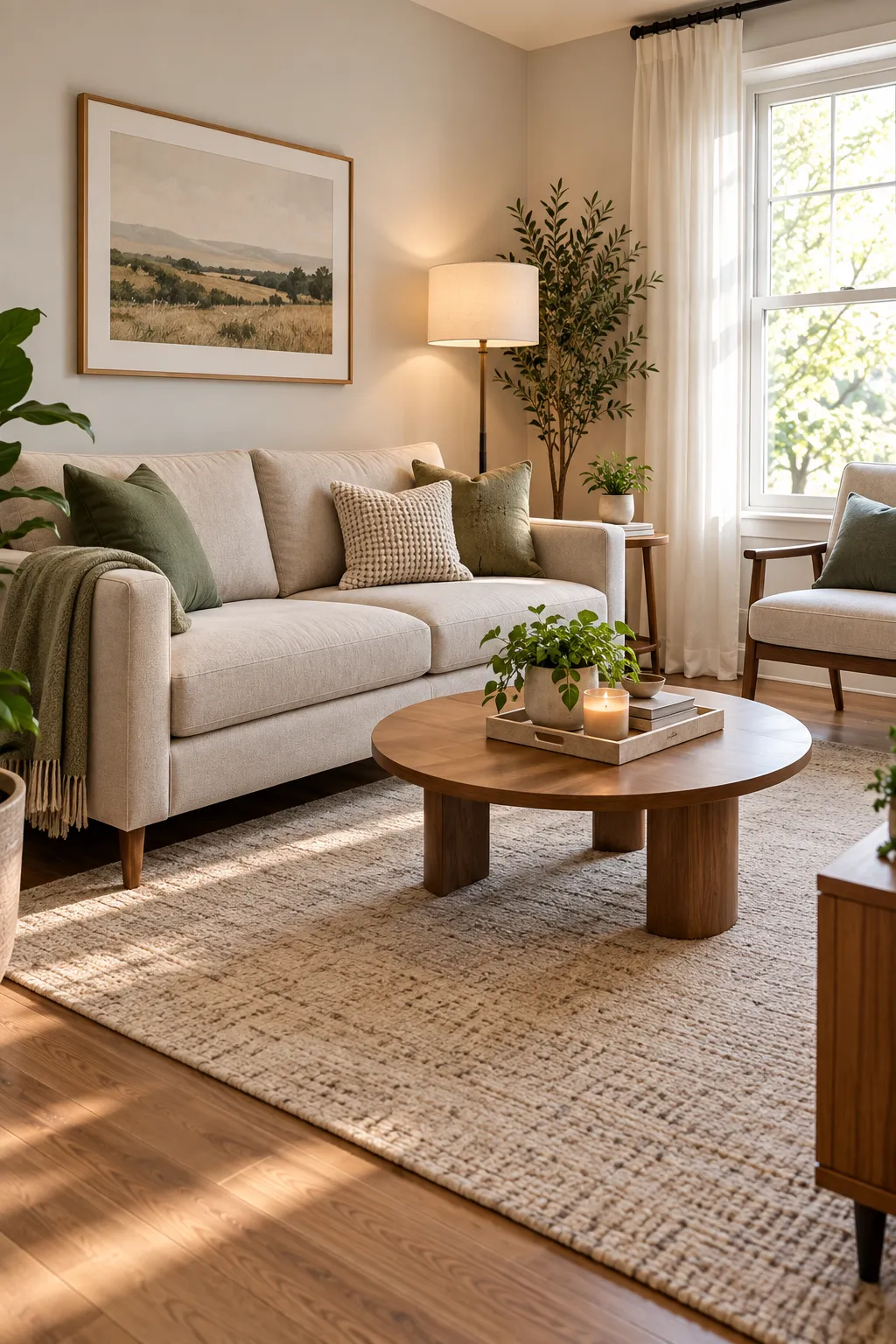
8. The Sofa-Back Slim Console
A narrow console behind the sofa can sometimes replace:
- side table
- charging station
- decorative console
all at once. This works particularly well when the sofa floats away from the wall.
Keep it very shallow
The console should not push the sofa far into the room. Think of it as a narrow functional strip.
Useful functions
It can hold:
- lamp
- phone charger
- drink
- small tray
depending on height and design.
Why it can save floor space
Instead of placing separate side tables on both ends of the sofa, one narrow piece behind it can serve several functions.
Best for open layouts
It works especially well when the sofa separates:
- living room
- dining area
- entry
The console can strengthen that boundary.
Do not overstyle it
A thin surface filled with:
- books
- plants
- frames
- candles
- bowls
will quickly feel cluttered.
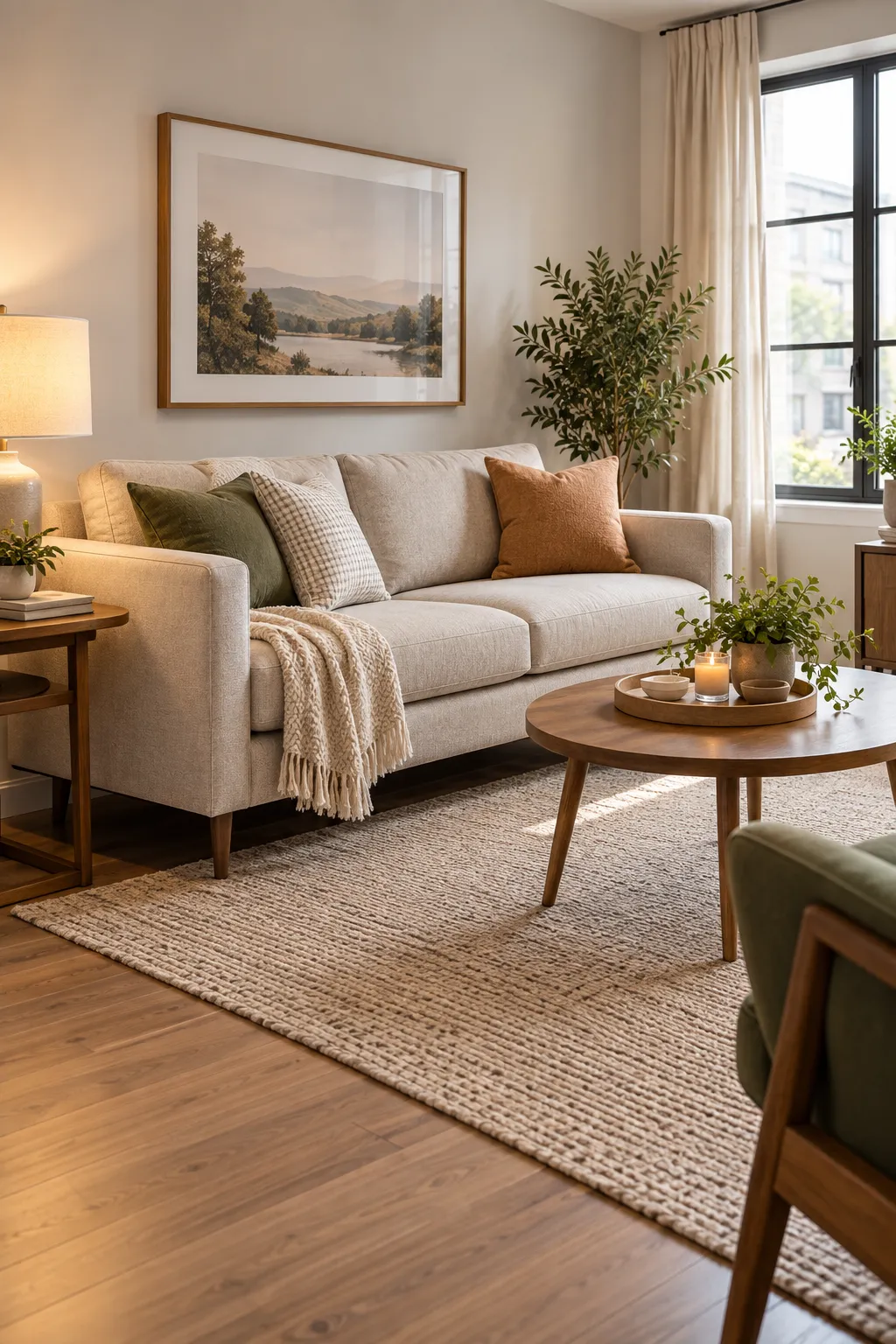
9. The Armless Accent Chair
Accent chairs often take up much more width than expected because of their arms. An armless chair can provide extra seating with a smaller footprint.
Where it works well
Try one:
- angled beside sofa
- near window
- in a corner
- between living and dining zones
Why it feels lighter
Removing the arms opens the sightline through the chair. That can make it visually less bulky.
Keep seat depth reasonable
A chair can be narrow from the front but extremely deep. Check the full footprint.
Comfort still matters
Armless chairs are not for everyone. If you prefer leaning against an armrest, choose a chair with very slim arms instead.
Use it for occasional seating
This is especially useful when the sofa handles most daily seating and the chair is primarily for:
- guests
- reading
- occasional use
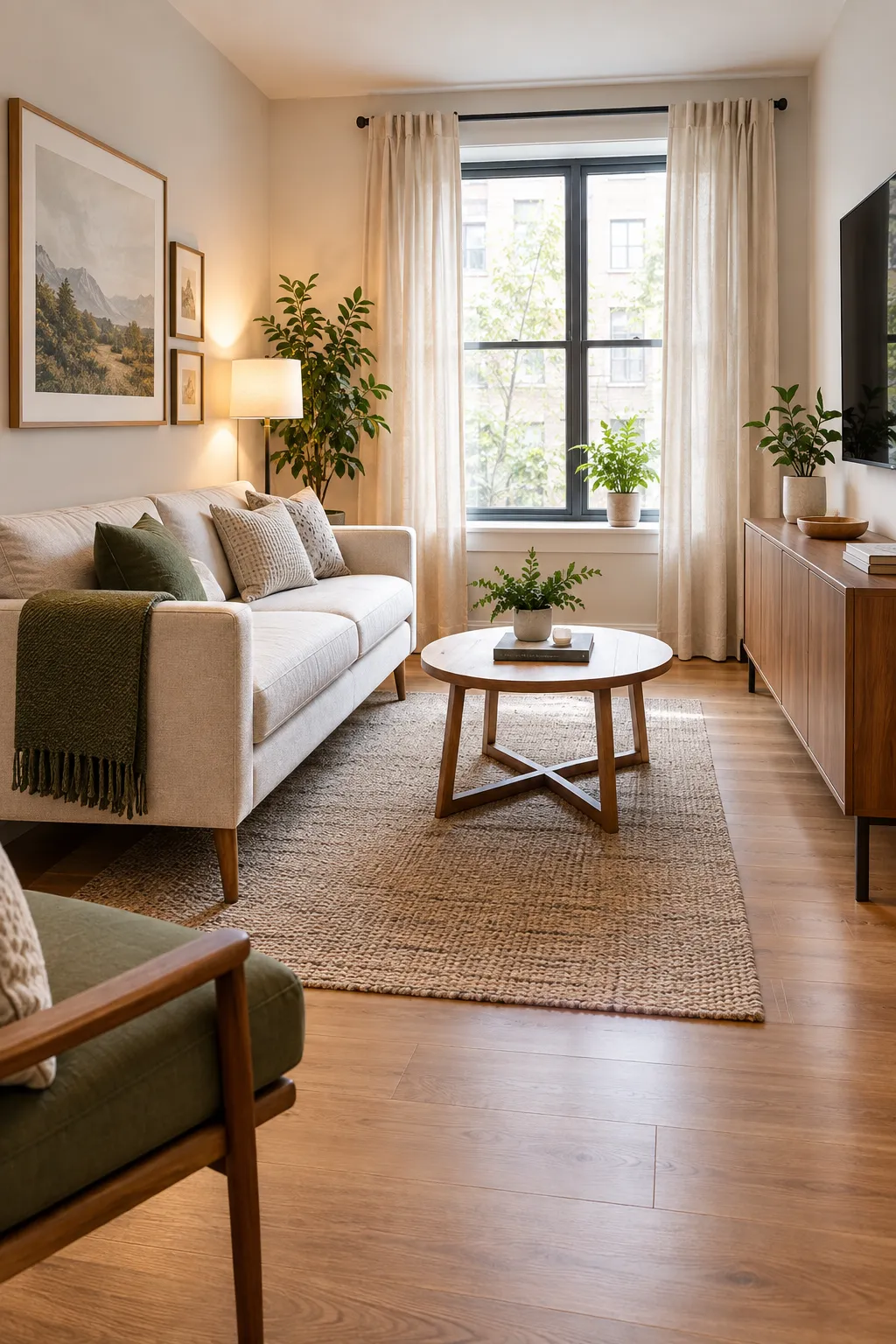
10. The Floating-Surface Setup
Not every surface needs furniture legs underneath it. A small wall-mounted shelf can sometimes replace a full side table or console.
Where it can work
Consider one:
- beside sofa
- beneath mirror
- near entry edge of living room
What it can hold
Keep the purpose specific. For example:
Sofa shelf
Drink + phone.
Entry-edge shelf
Keys + mail.
Decorative shelf
One plant + small object.
Why it saves space
You keep the floor open. That makes circulation easier and reduces the number of furniture pieces sitting at ground level.
Keep depth modest
A floating surface should not project so far that it becomes an obstacle.
Mounting considerations
It must be installed appropriately for:
- wall material
- expected load
If safe installation is not possible, use a slim freestanding piece instead.
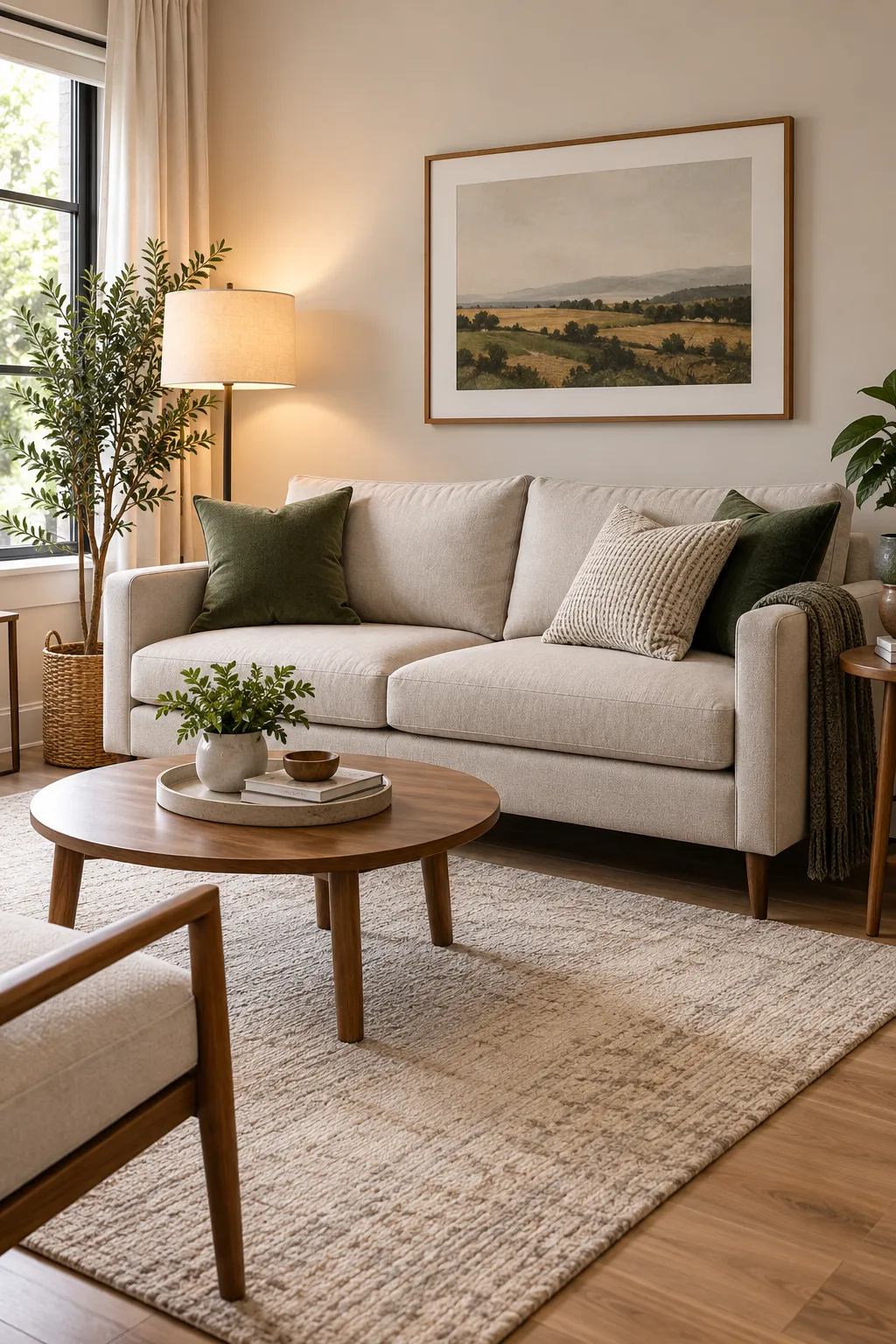
11. The Fewer-Bigger-Pieces Rule
This is one of the most useful small-room principles. A small living room does not always look better with lots of tiny furniture. Sometimes several miniature pieces create more visual clutter than a few properly chosen larger pieces.
Compare two setups
Setup A
- tiny sofa
- two small chairs
- two side tables
- small coffee table
- storage basket
- extra stool
Setup B
- comfortable compact sofa
- one chair
- one multifunctional table
- one closed media unit
The second setup may actually feel more spacious.
Why this happens
Every furniture piece creates:
- edges
- legs
- gaps
- visual boundaries
More pieces mean more visual information.
Prioritize the main functions
Ask what the living room actually needs. Usually:
- seating
- surface
- media/storage
- lighting
Everything else is optional.
Let some floor stay empty
Do not add a small item just because a corner can technically hold it. Visible floor is useful space too.
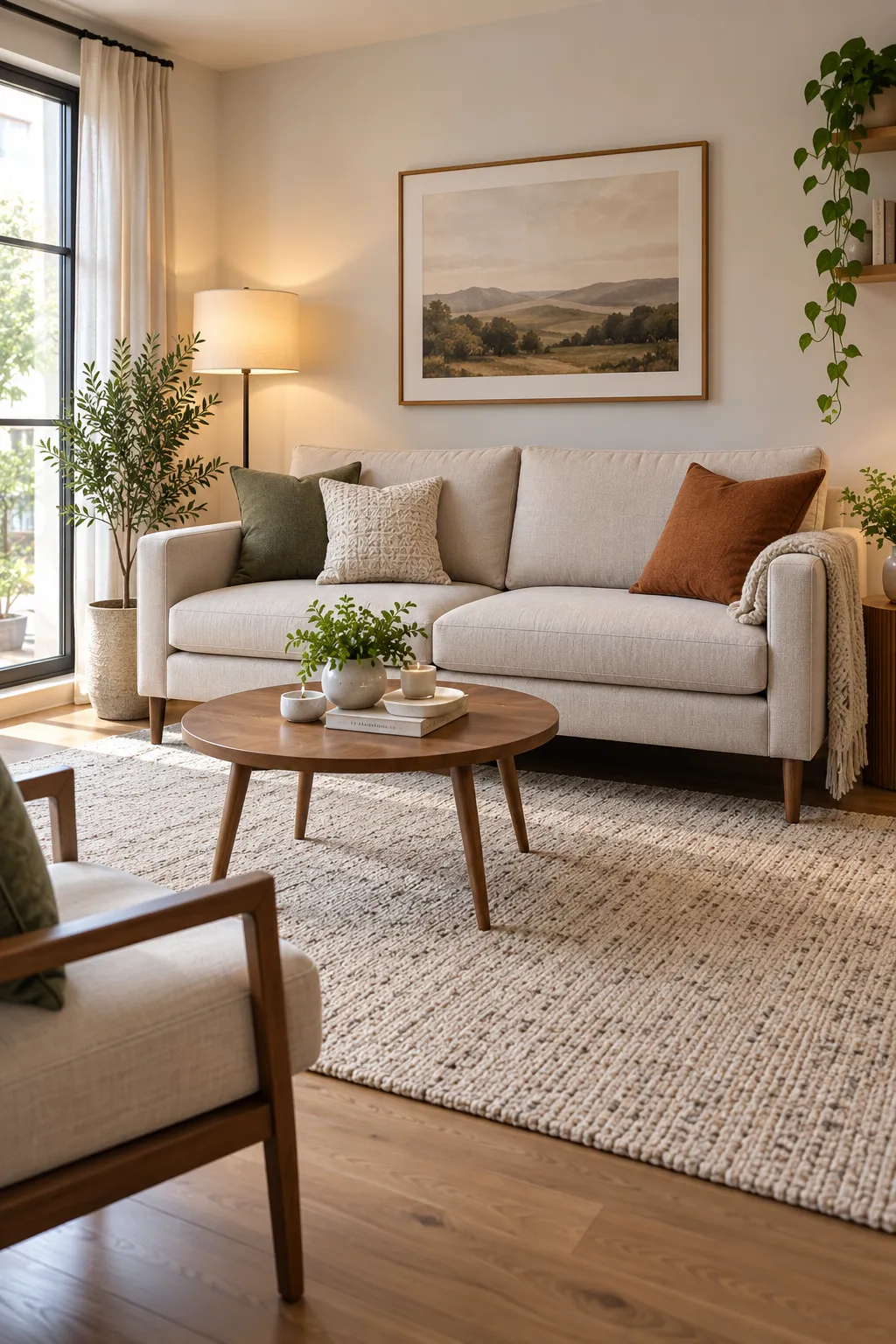
Start With the Walkway
Before buying furniture, identify the path people actually use through the room. This may connect:
- entry to hallway
- sofa to kitchen
- living room to balcony
- living room to dining area
That path should stay obvious. Furniture should sit around circulation, not force circulation around furniture.
Measure the Furniture in Use
A furniture listing tells you the closed dimensions. That is not always the real footprint. Remember:
Recliner
Needs space to extend.
Storage ottoman
Needs room for the lid.
Nesting table
Needs room when separated.
Chair
May need room to pull away from the wall.
Cabinet
Needs door or drawer clearance. Measure the active footprint.
Sofa Depth Matters as Much as Sofa Width
People often focus on wall length. But in a narrow living room, depth can be the bigger issue. A sofa that projects several extra inches into the room can reduce the walkway more than a slightly longer sofa with a shallower seat.
Before buying, measure:
wall → sofa front → coffee table → opposite furniture as one complete sequence.
Watch Oversized Sofa Arms
Thick arms may consume a surprising amount of width. If the overall sofa is 84 inches wide but each arm uses 10 inches, a meaningful portion of that footprint is not seating. Slimmer arms can improve space efficiency without reducing comfort as much as choosing a much shorter sofa.
Should You Buy a Sectional?
Sometimes. A compact sectional can work very well because it combines several seats into one furniture footprint. But it is not automatically space-saving.
Watch:
- chaise depth
- corner bulk
- room orientation
- circulation around the ends
A sectional works best when its shape matches the room.
Sofa or Loveseat?
Choose based on how many people actually use the room.
Sofa
Better if:
- two or three people sit there regularly
- living room is the main gathering space
Loveseat
Better if:
- one or two people use it
- room also needs dining or work space
- walkway is tight
Do not buy extra seating purely for hypothetical guests.
What About a Chaise?
A chaise can be comfortable, but it extends deep into the room. It works best when the chaise can occupy a corner or edge that does not interrupt circulation. Avoid placing it across the main path.
Coffee Table or Ottoman?
Coffee table
Best if:
- you need a firm surface
- you like visible floor underneath
- hidden storage is not important
Ottoman
Best if:
- storage matters
- you want extra seating
- you use a tray for hard surfaces
Choose based on the room’s actual shortage.
Coffee Table or Side Tables?
In an extremely narrow living room, you may not need a central coffee table at all. Try:
- one or two side tables
and leave the middle floor open. This can be especially useful when the main circulation route passes directly in front of the sofa.
Round vs Rectangular Coffee Table
Round
Better when:
- circulation moves around the table
- room is tight
- you want fewer sharp corners
Rectangular
Better when:
- sofa is long
- room is narrow
- table needs to follow the sofa shape
Neither is universally better.
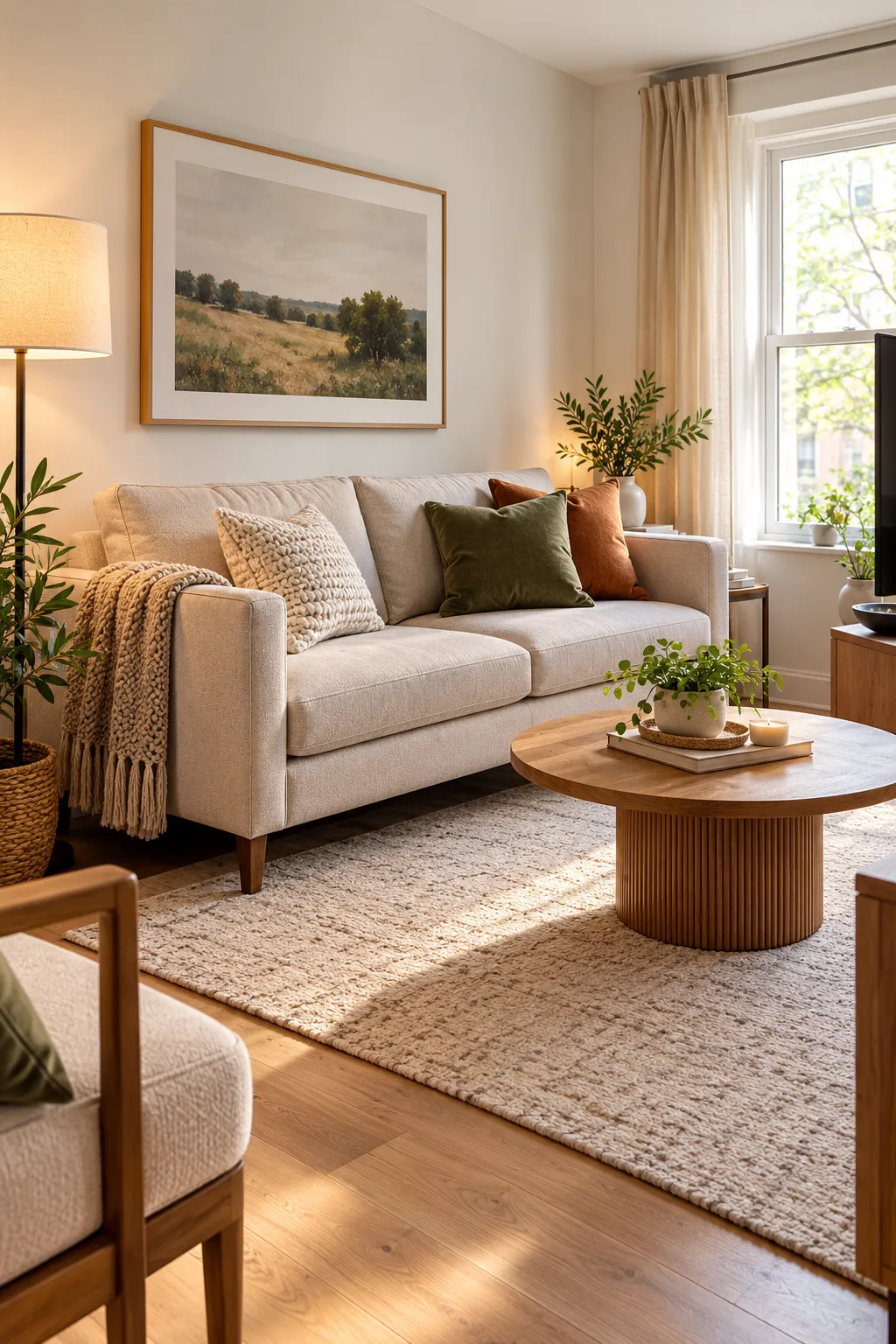
Transparent Furniture Can Help, but Do Not Depend on It
Glass or acrylic furniture can look visually lighter because you see through it. But transparent furniture still occupies floor space. Use it when:
- the shape fits
- function is good
- you genuinely like the material
Do not assume invisibility equals space saving.
Choose Storage Furniture Carefully
A storage piece earns its footprint when it replaces clutter elsewhere. For example:
A closed media console that stores:
- electronics
- games
- chargers
- books
may be better than:
- TV stand
- open shelf
- storage basket
as three separate pieces.
Closed Storage Usually Feels Calmer
Open storage adds visual detail. In a small living room, use closed cabinets for things such as:
- controllers
- cables
- paperwork
- toys
- miscellaneous household items
Reserve open shelves for a few items you want to see.
Use the Walls Before Adding Another Floor Cabinet
If you need:
- books
- small decor
- light storage
consider whether appropriate wall-mounted storage can solve the problem before placing another large unit on the floor. But use wall storage selectively. Covering every wall with shelves can make the room feel busy too.
Keep Furniture Off the Main Corners
Corners matter because they influence how open a room feels. Do not automatically place:
- plant stand
- basket
- lamp
- chair
in every corner. One empty corner can make the room feel substantially less packed.
Choose Furniture With a Clear Job
Every piece should answer:
What does this do?
Good answer:
- seats two people
- stores media equipment
- holds drinks
- provides reading light
Weak answer:
- fills the empty corner
Empty floor does not need to be fixed.
Avoid Duplicate Functions
A small room may not need:
- coffee table
- two side tables
- sofa console
- decorative console
all at once. If three pieces mostly exist to provide surfaces, reduce them.
Put the Largest Piece in First
Plan in this order:
1. Sofa
Determine the main seating position.
2. Circulation
Protect the walkway.
3. Media or focal wall
Add only what is necessary.
4. Secondary seating
Only if space remains.
5. Tables
Add the minimum needed.
6. Storage
Fill genuine gaps. Do not begin with decorative furniture.
Furniture Placement Can Create More Space Without Buying Anything
Before replacing furniture, try rearranging it. For example:
- move side table to other end of sofa
- remove unused stool
- rotate accent chair
- move basket under console
- shift sofa slightly
Sometimes the problem is not furniture size. It is furniture spacing.
Stop Pushing Every Piece Into a Corner
Furniture does not always need to sit tightly against walls. A few inches of breathing room can help a room feel intentional. But do not float furniture so far into a tiny room that you waste useful space.
Balance matters.
Leave a Clear Center Where Possible
Not every small living room needs a totally empty center. But if the room feels cramped, consider removing or downsizing the central coffee table. Visible central flooring makes the room feel easier to move through.
Small Living Room With a TV
Keep the media setup shallow. Try:
- wall-mounted TV where appropriate
- narrow console
- closed storage
- minimal accessories
Avoid adding deep bookcases around the screen unless the room truly supports them.
Small Living Room Without a TV
You may have more flexibility. Orient furniture toward:
- window
- conversation area
- artwork
You may not need a large focal-wall cabinet at all. That can free significant floor space.
Small Living Room With a Dining Area
Use furniture to create zones without building barriers. For example:
Living
Compact sofa + round table.
Dining
Narrow dining table. Avoid large cabinets between the two areas unless they solve a real storage problem.
Small Living Room With a Home Office
Use furniture that can share functions. Examples:
- slim console that doubles as desk
- nesting table that works as laptop surface
- closed cabinet storing office supplies
The room does not need an entirely separate furniture set for every activity.
Small Living Room in a Studio
In a studio, furniture is always visible from other zones. Prioritize pieces with:
- closed storage
- simple finishes
- moderate depth
- multifunctionality
Avoid filling the studio with lots of small individual furniture items.
Small Living Room With Kids
You may need:
- toy storage
- safer furniture edges
- durable surfaces
A storage ottoman or closed cabinet can be especially useful because it hides several small objects inside one visual piece.
Small Living Room With Pets
Avoid unnecessary furniture blocking:
- pet routes
- favorite sleeping spots
- access to windows or doors
Washable, durable pieces may be more valuable than extremely delicate “small-space” furniture.
How Much Floor Should Stay Visible?
There is no exact percentage. But you should be able to clearly see the room’s circulation path. If furniture, baskets and tables create a continuous chain across the floor, the room probably has too many pieces.
Common Small Living Room Furniture Mistakes
Buying tiny furniture with bulky shapes
Small overall size does not guarantee efficient use of space.
Ignoring sofa depth
Depth can destroy circulation.
Using too many tables
You probably need fewer surfaces than you think.
Filling every corner
Leave some breathing room.
Buying furniture only because it has storage
Storage furniture still needs to fit well.
Choosing a huge coffee table
The center of the room becomes blocked.
Using several open shelves
Visual clutter increases.
Buying for occasional guests
Permanent furniture should serve daily life first.
Choosing furniture before measuring the walkway
Circulation matters as much as fit.
Keeping a piece just because it technically fits
The room should function, not simply contain furniture.
A Simple Small Living Room Furniture Formula
For many compact rooms:
Seating
One slim-arm sofa.
Secondary seating
One light chair.
Surface
One nesting table or small coffee table.
Storage
One closed media unit.
Lighting
One floor lamp. That may be enough.
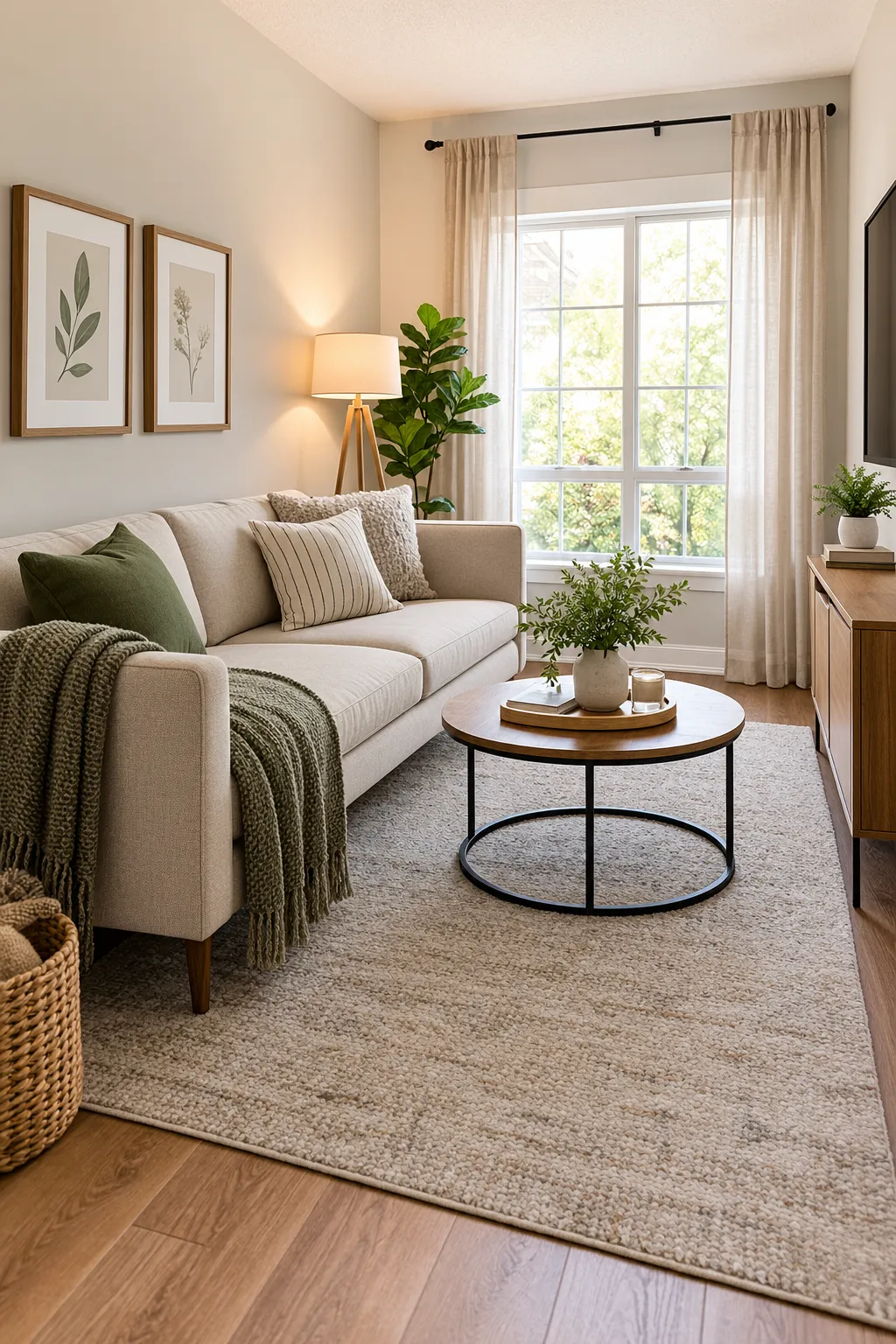
An Extra-Small Living Room Formula
Try:
Loveseat
Primary seating.
Side table
Instead of coffee table.
Wall-mounted TV
Where appropriate.
Narrow media shelf or console
Minimal storage. Leave the center as open as possible.
A Living Room That Needs More Storage
Try:
Sofa
Slim-arm model.
Coffee table
Storage ottoman.
Media unit
Closed cabinet.
Sofa-back console
Only if needed. Avoid adding multiple freestanding storage towers.
A Living Room for Occasional Guests
Optimize for normal life first. Try:
Everyday
Sofa + one chair.
Guests
Use:
- dining chairs
- lightweight stool
- pouf
temporarily. You do not need four permanent lounge chairs for people who visit once a month.
Which Furniture Idea Fits Your Living Room?
Choose a Slim-Arm Sofa if:
Your current sofa wastes width on oversized arms.
Choose a Loveseat if:
The sofa dominates the room and only one or two people use it regularly.
Choose Raised-Leg Furniture if:
The room feels visually heavy.
Choose a Pedestal Side Table if:
Corners and table legs interrupt movement.
Choose Nesting Tables if:
You need different amounts of surface space at different times.
Choose a Storage Ottoman if:
You need both hidden storage and a central surface.
Choose a Wall-Mounted Media Console if:
The TV wall feels heavy at floor level.
Choose a Sofa-Back Console if:
You need a surface but do not want multiple side tables.
Choose an Armless Chair if:
You need occasional seating with less width.
Choose Floating Surfaces if:
Floor space is more valuable than storage capacity.
Follow the Fewer-Bigger-Pieces Rule if:
Your living room contains many tiny furniture pieces but still feels crowded.
Final Thoughts
Creating more floor space in a small living room is not about buying the smallest possible version of everything. It is about choosing furniture that does more with its footprint. Start with the sofa.
Then protect the walkway. After that, add only the surfaces, seating and storage the room actually needs. Look for:
- slimmer arms
- moderate depth
- visible legs
- closed storage
- multifunctional pieces
- fewer furniture legs
- fewer total pieces
And leave some floor intentionally empty. A small living room often feels more spacious when the furniture is better selected, not simply smaller.
- small living room
- small spaces
- living room furniture
- space saving furniture
- small home ideas
- living room ideas